

 What we do
 Physical Therapy
Sixty minutes, one-on-one, every time.
Generally HSA/FSA-eligible — we provide documentation for any claim you submit.
One therapist, your whole hour — a Doctor of Physical Therapy who watches how you actually move, finds what's driving the problem, and treats it hands-on. No aides, no double-booking, no plan handed down from a billing code.
Because we're cash-pay, the work follows the problem wherever it leads: manual therapy, corrective movement, and advanced techniques like dry needling, cupping, and blood-flow-restriction training — all inside the same sixty minutes.
And every session includes complimentary same-day access to the full hot-and-cold contrast suite, so the recovery work compounds the hands-on work.
- Manual therapy, movement & corrective exercise
- Dry needling, cupping & BFR — included
- Complimentary same-day contrast suite access
- InBody scan — intake & discharge
- HydroMassage chair
- A home program you'll actually follow

We open spring 2027 — but opening-week evaluation slots go to the founding list first. Join the list and flag your interest in physical therapy, and we'll reach out to schedule your evaluation before we open to anyone else.
Physical therapy held to a higher standard.
The difference isn't a slogan — it's the hour itself: a doctorate-level clinician, the whole sixty minutes, advanced techniques included, and progress you can measure. Here's what that means in practice.
The full hour, with a DPT
Sixty minutes one-on-one with a Doctor of Physical Therapy — never an aide, never split between patients. Evaluation, treatment, and coaching, all from the clinician who knows your case.
The root cause, not the billing code
Out-of-network means the plan follows your body, not an insurer's limits. We find what's actually driving the pain and build the work around it.
Advanced techniques, included
Dry needling, cupping, and blood-flow-restriction training are part of your hour when they'll help — tools many clinics bill separately or don't offer at all.
Progress you can measure
An InBody body-composition scan at intake and discharge — with clinical biometric testing available — so improvement shows up in numbers, not just in how you feel.
Included in your physical therapy, when they'll help.
These aren't add-ons or upsells. When your therapist judges they'll speed things along, they're part of the same sixty minutes — each one chosen for the problem in front of us and grounded in the evidence.
Dry needling
Thin monofilament needles placed by your DPT into the tight, tender knots in a muscle — the myofascial trigger points. It isn't acupuncture; it's a Western, anatomy-driven technique aimed at the exact spot referring your pain.
When a muscle won't let go, needling can reset it in a way hands alone often can't — releasing the taut band and calming referred pain. Drug-free, precise, and part of your hour at no extra charge.
Cupping
Suction cups lift and decompress the skin and soft tissue — the opposite of pressing in. Your therapist places them over tight areas, sometimes moving them along the muscle, to draw blood flow into tissue that's been guarding.
It's a gentle way to loosen stubborn fascia and stiff, overworked muscle so you move more freely before we load it. We use it as one tool inside a plan — not a standalone fix — and the marks fade in a few days.
A large Finnish sauna and three cold plunges.
Heat, then cold, then a room to sit in. The contrast suite is communal by design — the place where regulars learn each other's names and the reset becomes a ritual.
Come for the physiology; stay for the room. It's the part of recovery most people didn't know they were missing.
- 190°F Finnish sauna
- Three graduated cold plunges — 52°F, 46°F & 40°F
- Full recovery lounge
- Sauna seats up to 30

Where wearable data becomes a plan.
Credited toward membership if you join within 30 days.
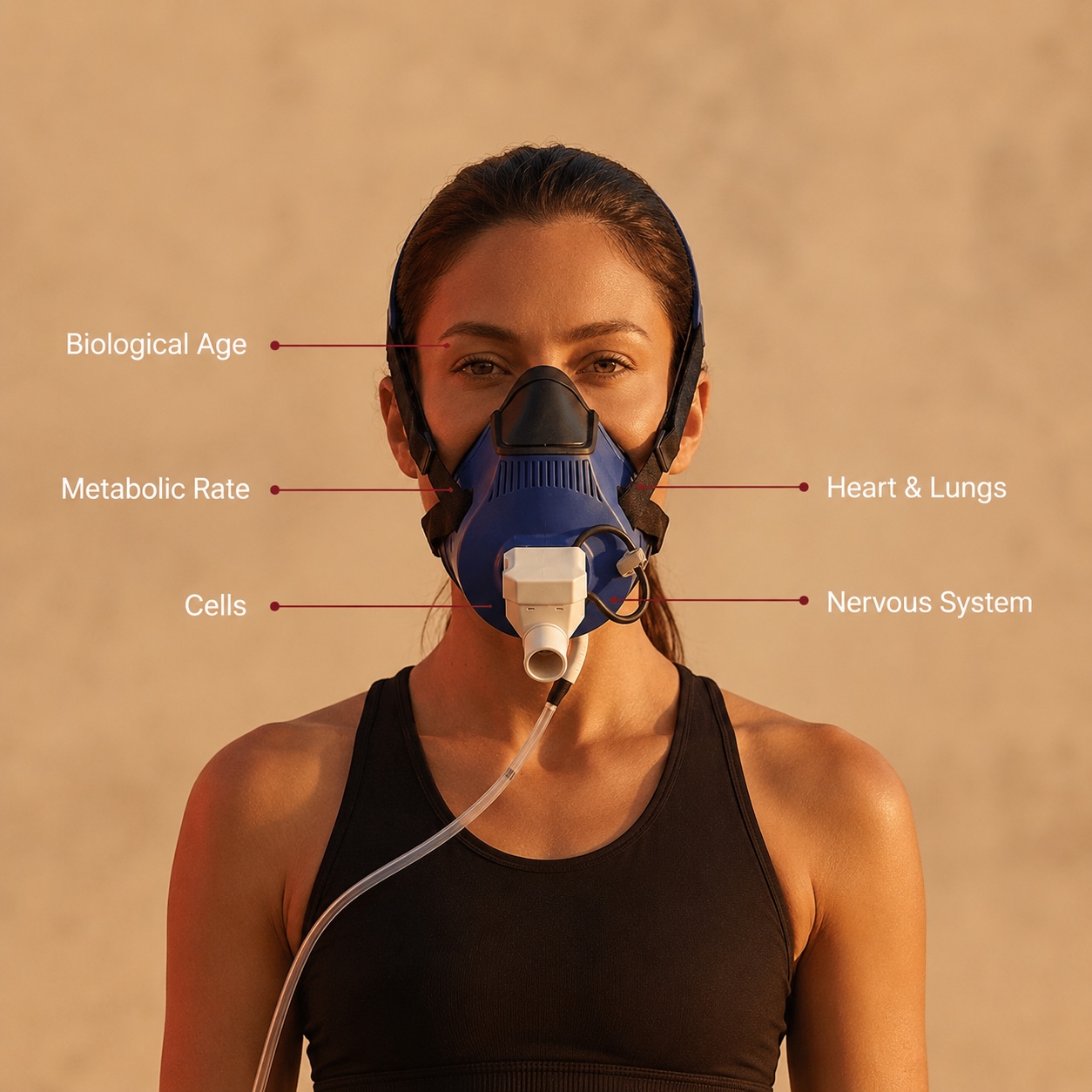
Clinical-grade PNOĒ breath analysis measures what your watch only estimates — VO₂ max, resting metabolic rate, biological age. Real numbers, taken properly.
Then we do the part the data can't: sit with you, read what it means for your goals, and turn it into something you can act on.
- PNOĒ breath analysis
- VO₂ Max
- Resting metabolic rate (RMR)
- Biological age